Meet Your Clinician
Meet Dakota Goldsberry
Dakota Goldsberry, EdS, MA, LPCC-S, THLT, NCC is a licensed professional counselor who works with children, adolescents, college students, adults, couples, and families. His approach to therapy is warm, collaborative, practical, and individualized.

Dakota believes therapy should be a place where clients can feel safe enough to be honest, supported enough to explore difficult experiences, and empowered enough to build meaningful change. He does not believe in forcing every client into the same treatment model. Instead, he adapts therapy to each person's needs, developmental level, goals, strengths, family system, lived experience, and pace.
His clinical work includes supporting clients experiencing trauma, anxiety, depression, ADHD, autism, emotional dysregulation, behavioral concerns, grief, relationship difficulties, family transitions, school stress, foster care and adoption concerns, and major life changes. He also works with adults across the lifespan, addressing a wide range of concerns, life experiences, and reasons for seeking therapy.
Areas of Focus
- Trauma and PTSD
- Autism
- ADHD
- Anxiety
- Depression
- Emotional regulation
- Behavioral concerns
- Attachment
- Foster care
- Adoption
- Family changes
- Grief
- Stress
- School concerns
- Relationship concerns
- Parenting
- Self-esteem
- Life transitions
- Neurodivergence
Working With Children & Teens
Therapy That Meets Kids and Teens Where They Are
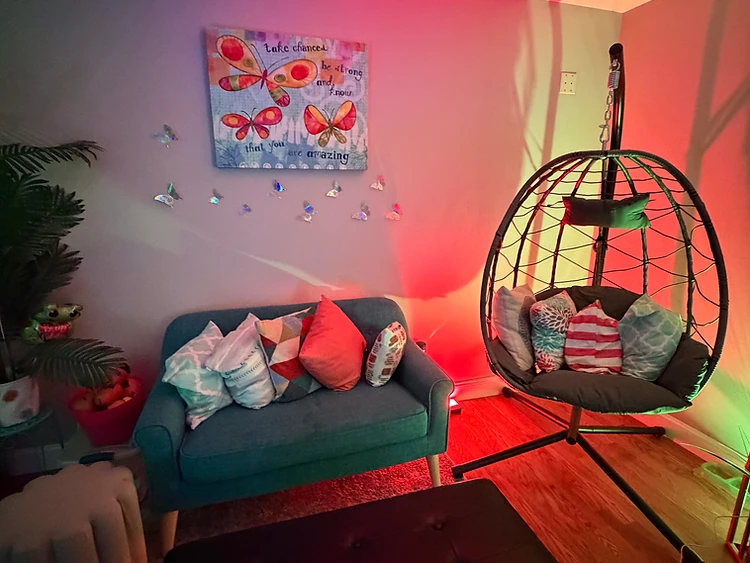
Dakota works extensively with children and adolescents, and he has specialized education in Play Therapy. Therapy with younger clients looks different from adult talk therapy. He uses developmentally appropriate approaches including play, creativity, coping skills, emotional regulation work, relationship-building, sensory awareness, family collaboration, and behavioral interventions.
Behavior is often communication. Effective child therapy involves understanding what is happening underneath the behavior rather than simply trying to make the behavior disappear. Parents and caregivers may be included in treatment when clinically appropriate, so that skills learned in therapy can transfer into home, school, and family life.

Trauma & EMDR
Dakota is trained in EMDR and provides trauma-informed therapy for clients who have experienced difficult, distressing, or overwhelming events. EMDR is an evidence-based psychotherapy approach designed to help the brain process distressing memories and experiences.
Trauma work is never rushed. Dakota emphasizes safety, preparation, and stabilization first, and respects each client's pace. EMDR is not a quick fix, and no outcome is guaranteed — but many people find it a meaningful part of healing when the time is right.


Neurodiversity-Affirming Care
Understanding You, Not Changing Who You Are
Dakota provides neurodiversity-affirming support for clients with ADHD, autism, sensory differences, executive functioning challenges, and other neurodevelopmental differences. The goal is understanding the person — not forcing conformity to a single definition of normal.
Together, the focus is on strengths, sensory needs, communication preferences, emotional regulation, executive functioning, social stressors, and creating realistic strategies that actually work in everyday life.
College Students & Young Adults
Support for a Pivotal, Pressure-Filled Season
College and young adulthood can be exciting and overwhelming in equal measure. Dakota understands the practical realities of balancing education, professional responsibilities, relationships, and personal life. Common concerns include academic pressure, working while attending school, burnout, anxiety, identity development, relationships, family expectations, career uncertainty, independence, executive functioning, and feeling overwhelmed.
Dakota is currently pursuing a PhD in Counselor Education and Supervision — a commitment to continued learning and professional growth that helps him stay thoughtful and current in his clinical work.


Meet Our Therapy Dog
Ryder
Office Therapy Dog
Ryder is the office therapy dog, a gentle and friendly companion who helps clients of all ages feel more at ease. Whether it is a child's first visit or an adult who finds the therapy room a little intimidating, Ryder is happy to offer a calming presence — and he is present in every in-person session at the Vienna office.
Beyond the Therapy Room
Dakota is also involved in counselor education, professional development, supervision, teaching, and continued graduate education. This is not about collecting credentials — it is about staying curious and intentional. Continued learning helps Dakota remain thoughtful, current, and grounded in his clinical practice, so that the care he offers keeps growing alongside the people he works with.
Clinical Supervision
Clinical Supervision in Ohio
Dakota offers clinical supervision for counselors working toward independent licensure in Ohio. As an LPCC-S — a Licensed Professional Clinical Counselor with Supervisor designation — he supports supervisees across the developmental arc of their training, from early clinical hours to the final stretch toward independence.
His approach to supervision is relational and developmental. Rather than a one-size-fits-all checklist, supervision grows with you: the relationship provides the safety to be honest about uncertainty, mistakes, and growth edges, while the developmental lens meets you where you are — building competence, confidence, and clinical identity one stage at a time.
- Relational supervision grounded in trust, honesty, and mutual respect
- A developmental frame that adapts to your stage of training and growing competence
- Support for case conceptualization, clinical decision-making, and professional identity
- Available to counselors pursuing licensure in the state of Ohio
"I believe therapy works best when you feel safe enough to be honest, understood enough to be yourself, and supported enough to try something different. My role is not to tell you who you should be. My goal is to help you understand what you are experiencing, identify what matters to you, and build practical ways to move forward."
"Whether I am working with a child through play, helping a teenager navigate overwhelming emotions, working with an adult processing trauma, or supporting a family through change, I want therapy to feel human, collaborative, and useful."
— Dakota Goldsberry
Therapy Approaches Dakota May Draw On
Therapy is individualized and collaborative — never one-size-fits-all. These approaches are woven together based on what fits you.
EMDR
An evidence-based approach to help the brain process distressing memories, at your pace.
Play Therapy
Developmentally appropriate play and creative work for younger clients.
Cognitive Behavioral Therapy
Practical strategies for the thoughts, feelings, and patterns that shape daily life.
Dialectical Behavior Therapy
Skills for emotional regulation, distress tolerance, and mindfulness.
Solution-Focused Brief Therapy
A strengths-oriented focus on what's working and what you want next.
Person-Centered Therapy
A grounded, relational space built on empathy, genuineness, and respect.
Trauma-Focused Approaches
Care that prioritizes safety, stabilization, and your pace.
Strength-Based Approaches
Therapy that builds on who you already are and what you already do well.
Sandplay
A nonverbal, symbolic way to explore feelings — especially helpful for children.
Relational Approaches
Healing through a safe, genuine therapeutic relationship.
If You Are in Crisis, Help Is Here Now
You matter, and you do not have to face this moment alone. If you or someone you love is struggling or in danger, please reach out right now — people are ready to listen and help.
Wondering Whether We're a Good Fit?
You are welcome to reach out and ask questions before scheduling. There is no pressure — just a conversation.